
Best Dog Recovery Suit 2025: What Actually Protects a Healing Wound
Your dog came home from surgery groggy and sorry for herself, and by evening she's found the incision. That's when the search for the best dog recovery suit of 2025 actually starts, not in the calm of the vet's waiting room. A good recovery suit is fabric that covers the torso and wound, stopping the licking and chewing without turning your dog into a confused, cone-bumping pinball.
The honest answer: no suit, and no cone, is automatically best for every dog, no matter how confidently a product page insists otherwise. What matters is whether the barrier actually covers the wound your dog is obsessing over, whether your dog will tolerate wearing it for the 10 to 14 days most incisions need, and whether it stays clean enough to protect the skin rather than irritate it. This guide compares the real options honestly, reviews the leading named products, walks through sizing and timelines, and tells you plainly when a suit is the wrong tool for the job.
Quick Answer
There's no single winner among 2025's recovery suits because the right choice depends on where the wound actually sits. For torso incisions like spay, neuter or abdominal surgery, a well-fitted suit such as Pupcovery's is often kinder than a cone. For facial, ear, paw or tail wounds, a suit can't reach the area, so a cone or vet-approved alternative is still needed.
Key Takeaways
- A recovery suit works best for torso and abdominal incisions; it can't protect a wound on the face, ears, paws or tail tip.
- Most routine soft-tissue surgeries need continuous suit or cone wear for about 10 to 14 days, the standard window for incision healing and suture removal.
- The cone, the t-shirt and the recovery suit each have genuine trade-offs; none is universally best, including the top recovery suits dogs owners buy most often.
- Fit, cleanliness and daily incision checks matter more than the brand of suit you choose.
- Your vet's specific discharge instructions always override a general timeline.
In This Article
- What Makes a Recovery Suit the Best Choice in 2025?
- Cone vs T-Shirt vs Recovery Suit: The Honest Comparison
- Dog Surgery Suit Review: How the Named Brands Compare
- When Your Dog Won't Stop Licking the Wound
- How Long Should a Dog Wear a Recovery Suit After Surgery?
- Fitting and Using a Recovery Suit Correctly
- Recovery Suit for a Puppy: What's Different
- When a Recovery Suit Isn't Enough
- What Does Post-Surgery Aftercare Actually Cost?
- Choosing the Best Recovery Suit for Your Dog
- FAQ

What Makes a Recovery Suit the Best Choice in 2025?
The best recovery suit is the one that fully covers the wound, fits snugly without cutting off circulation, and stays clean and dry for the whole healing window. Coverage location is the first filter: a suit protects the torso and abdomen well, but it does nothing for a facial wound, an ear infection or a paw injury.
Comfort is the second filter, and it's where suits earn their reputation. Per VMC Easton's guidance on surgical suits, many dogs find a rigid Elizabethan collar harder to live with day to day than a fabric alternative, and a well-fitted suit skips most of that friction.
Durability and washability matter more than most owners expect, since the garment lives on your dog nearly around the clock for two weeks. A suit that can't survive daily washing without going baggy won't survive a full recovery, which is why our guide to washing a dog recovery suit is worth reading before surgery day, not after you've already ruined one.
Expert Insight: A recovery suit is a legitimate alternative to the cone for dogs with torso incisions, and the deciding factor is always whether the fabric actually reaches the wound.
Source: Whole Dog Journal, "When to Choose a Dog Recovery Suit"
Cone vs T-Shirt vs Recovery Suit: The Honest Comparison
None of the three common wound-protection tools is perfect, and any article promising an outright winner is skipping the part where your dog's wound location decides the answer. Here's what each option actually delivers, marketing gloss removed.
The Elizabethan collar, the classic plastic cone, remains the most reliable total barrier because it blocks the mouth from reaching almost anywhere. Its downside is exactly what the VMC Easton team calls the "no cone zone": dogs bump into furniture, struggle to eat and drink, and some spend two weeks looking personally offended by a lampshade.
A homemade t-shirt or bandage wrap is cheap and occasionally fine for a minor, shallow wound on a calm dog, but it's the least reliable option here. It slips, twists and rarely survives the night, and per Whole Dog Journal's guidance on choosing a recovery suit, a barrier only helps if it actually blocks access to the wound, not merely discourages it.
A purpose-built recovery suit sits in the middle: better tolerated than a cone for torso wounds, more secure than a t-shirt, but only as good as its fit and coverage. Among the top recovery suits dogs wear post-surgery, the deciding factor is rarely the label. It's whether the fabric actually reaches the wound.
| Option | Best for | Verdict |
|---|---|---|
| Elizabethan collar (cone) | Facial, ear, paw, tail or any wound outside torso coverage | Most total barrier; hardest for many dogs to live with day to day |
| Homemade t-shirt or bandage | Very minor, shallow wounds under close supervision | Cheap but unreliable; slips and twists, not for overnight use |
| Recovery suit (e.g. Pupcovery, Suitical) | Spay, neuter, abdominal surgery, hot spots, trunk wounds | Comfortable and effective when it fully covers the wound; useless for extremities |
Expert Insight: A recovery suit is a legitimate, often better-tolerated alternative to the cone for torso incisions, but it only works if it genuinely prevents the dog from reaching the wound.
Source: Whole Dog Journal, "When to Choose a Dog Recovery Suit"
You're probably weighing this decision right now with a dog who looks perfectly fine and a vet appointment three days behind you. That gap, between how healthy your dog looks and how vulnerable the incision still is, catches almost every owner out at least once, usually around 2 a.m.
Dog Surgery Suit Review: How the Named Brands Compare
A fair review compares named products on the same three criteria: coverage, tolerance and washability, not marketing copy. Suitical, one of the more established names in the category, markets its suit directly to owners on its own product page as a stress-reducing cone alternative, though that's manufacturer messaging, not independent testing.
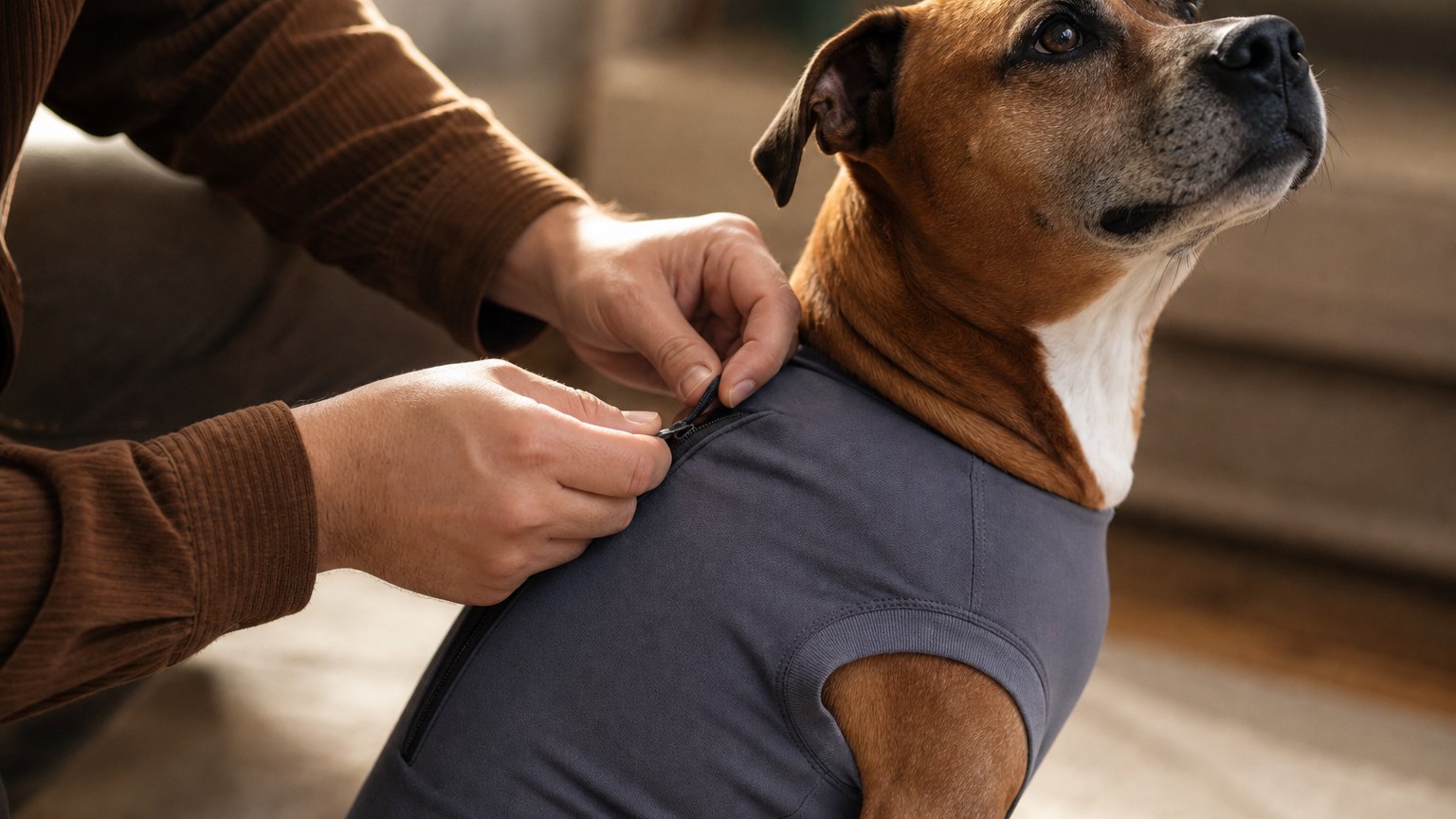
Pupcovery's suit competes on the same territory: torso and abdominal coverage, soft breathable fabric, and a zip designed for quick incision checks rather than a full re-dress. What actually separates suits in this category is fit consistency across sizes and how well the fabric survives daily washing, not any headline feature.
Neither Pupcovery nor Suitical publishes independent clinical data comparing healing outcomes between brands, so treat comfort and fit claims as reasonable but unproven. Claims that a suit speeds healing or beats a cone outright tend to originate with manufacturer marketing, including Suitical's own recovery suit page. Per AM/PM Animal Hospital's guidance on surgical recovery suits, the more defensible statement is simpler: a correctly fitted suit helps by preventing licking and chewing while allowing more normal movement than a rigid collar.
When Your Dog Won't Stop Licking the Wound
The problem: once a dog discovers stitches, licking stops being a bad habit and becomes a full-time job with excellent benefits. Persistent licking is one of the main ways a clean incision turns into an infected one, a delayed heal or a reopened wound.
The solution: a purpose-designed recovery suit covers the wound without the stress of a cone, so the dog can rest, eat and move normally while the barrier does the actual work.
Choosing a Suit That Actually Stops the Licking
The problem: many owners try a t-shirt first because it feels gentler, only to find their dog has worked it loose by night two and is back at the incision by morning, triumphant, as if the stitches were always theirs.
The solution: a snug, purpose-built recovery suit gives continuous coverage instead of intermittent coverage, and that difference is what actually protects healing tissue.

It's also available on Amazon for fast delivery, handy if surgery's tomorrow morning and the suit needs to show up tonight.
Expert Insight: Surgical recovery suits help many dogs heal after surgery by preventing licking and chewing while allowing more normal movement than a rigid collar, provided the suit is fitted correctly and stays clean throughout the healing period.
Source: AM/PM Animal Hospital, "How Surgical Recovery Suits Help Dogs Heal After Surgery"
How Long Should a Dog Wear a Recovery Suit After Surgery?
For most routine soft-tissue surgeries, including spay and neuter, plan on continuous suit wear for about 10 to 14 days, the standard window for an incision to heal and for sutures or staples to come out. That figure holds across a wide range of veterinary sources, and it's the same window a cone would be needed for.
The suit stays on until your vet confirms the wound has healed, not until a date circled on the calendar. Per Vet Garofallo's guidance on surgical suit duration, plan on roughly two weeks of continuous wear, though your surgical team's own discharge instructions always beat any general rule. Noble Vet Clinic's guidance on the cone after spay surgery points to a similar timeframe for when a collar or suit can typically come off.
Incisions closed with sutures or staples generally need about 10 to 14 days before those closures can come out, and the wound stays vulnerable to reopening or infection the whole time. Many procedures now use absorbable, buried sutures with nothing external to remove, but the tissue underneath still needs a similar stretch of time to knit together, so the suit comes off on a comparable schedule.
Per the TailMe guidance on recovery suit duration for dogs and cats, the safest approach is to keep the suit on until a vet has physically inspected the incision, not just counting days.
Expert Insight: Surface healing is not the same as full internal healing. A wound enters a maturation phase around day 14 that continues for weeks afterwards as collagen strengthens the tissue, even though the dog looks and behaves normally well before then.
Source: Sustainable Vet, "What to Expect After Your Dog's Soft Tissue Surgery"
This is where most owners get caught out. By day nine the dog looks entirely recovered: tail wagging, appetite back, zero interest in resting quietly. That's exactly when the suit feels least necessary and matters most.
Recovery time also varies by the individual dog. Age, size, body composition, weight and breed all affect healing speed, which is why your neighbour's ten-day timeline is not a promise for your dog.
Fitting and Using a Recovery Suit Correctly
A recovery suit only protects a wound if it's fitted and worn correctly, which sounds obvious until you're wrestling a groggy, uncooperative dog into fabric at ten at night. Measure chest girth and body length before ordering rather than guessing from breed alone, since two dogs of the same breed can differ wildly in shape.
Because the suit is worn nearly around the clock for two weeks, hygiene matters more than owners expect. A damp or soiled suit against a healing incision raises the risk of skin irritation and infection, so a second suit to rotate while one's in the wash is a practical step, not a luxury. Our full guide to washing a dog recovery suit covers detergent choice, drying, and how often to rotate.
Some determined dogs will still find a way to lick through the fabric or reach an uncovered edge. If that happens, tell your vet promptly. You may need a snugger fit, a different design, or a temporary cone until the sizing issue's sorted.
Recovery Suit for a Puppy: What's Different
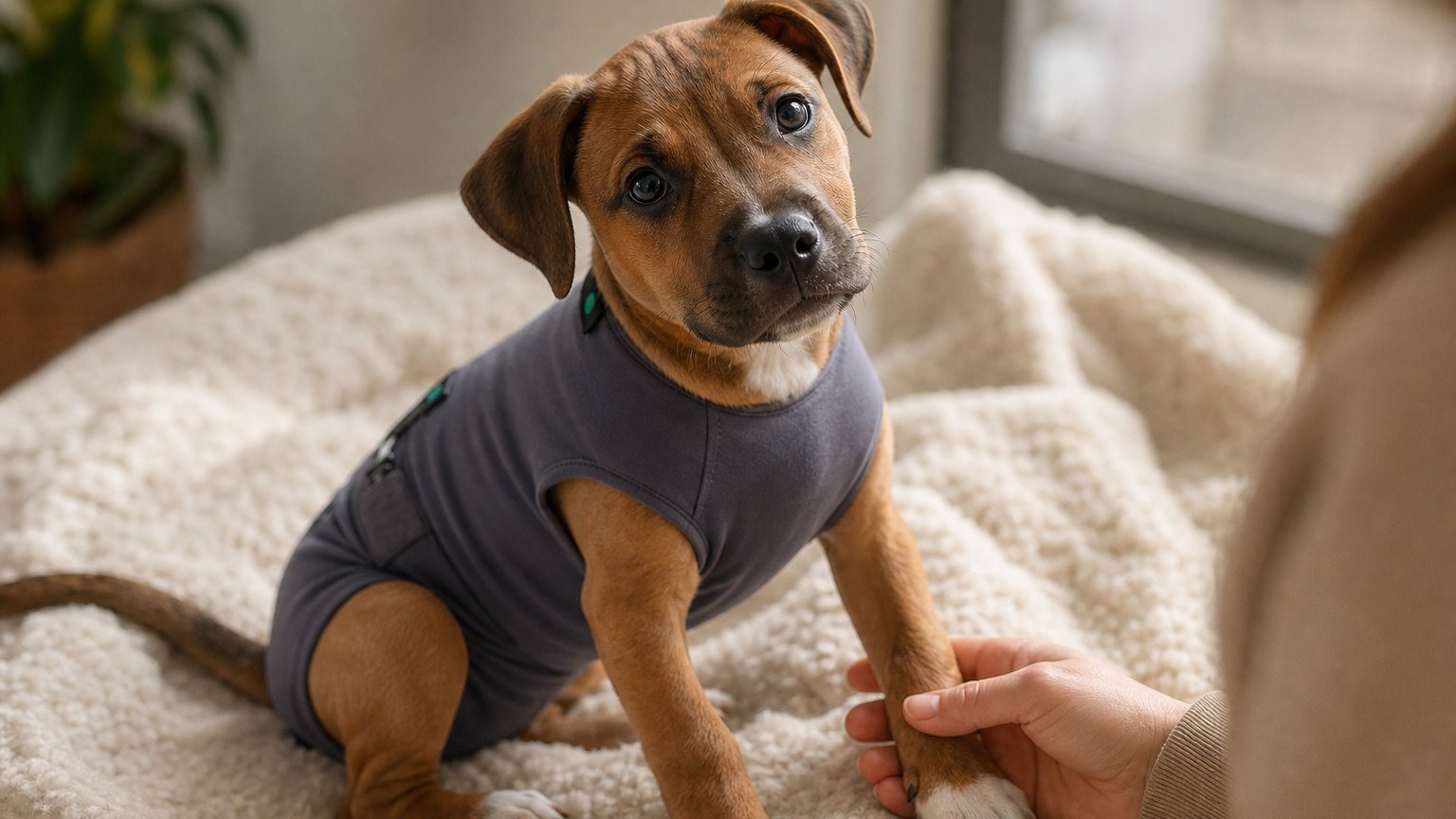
Puppies are often the hardest patients to keep still, not because they're more determined than adult dogs but because they have more spare energy for bad decisions. A puppy recovery suit often settles better than a collar during a routine spay or neuter, since it avoids the disorientation that makes some puppies bump into everything and skip meals.
That said, a puppy recovery suit isn't automatically right for every puppy, or every wound. If the surgical site sits on the face, ears, paws, lower legs or tail tip, a torso-covering suit doesn't solve anything, because the puppy can still reach the area easily, and will, with the single-minded persistence puppies reserve for exactly the wrong hobbies.
For a puppy recovering from an abdominal or spay incision, plan on the same roughly 10 to 14 day window most veterinary guidance gives adult dogs, with activity kept deliberately boring throughout. Our complete dog spay recovery guide covers day-by-day expectations, and our piece on keeping a dog entertained during crate rest is worth reading before day four, right around when boredom becomes the bigger battle than the wound.
When a Recovery Suit Isn't Enough
A recovery suit isn't a universal replacement for a cone, and pretending otherwise does dogs a disservice. If the wound is on the head, ears, paws, lower legs or tail, the suit's coverage simply doesn't reach it, and the dog will lick or scratch freely.
Claims that a suit speeds healing or beats a cone outright come mostly from manufacturer and retailer marketing, including product pages such as Suitical's own recovery suit page, and they aren't strong clinical claims. The defensible, evidence-backed statement is more modest: a suit is an effective barrier that many dogs tolerate better than a cone, provided it actually prevents access to the wound.
If your dog scratches persistently at a covered area despite the suit, chews through the fabric, or the incision looks worse after a few days, stop relying on the suit alone and call your vet. Our guide on recovery suits versus ace bandages and our piece on keeping a dog from licking stitches without a cone both cover situations where a suit alone falls short.
When to Call Your Vet
- The incision shows continuous drainage, worsening swelling, or a foul smell.
- Your dog manages to lick or chew the wound despite the suit being on correctly.
- The suit has caused visible skin irritation, redness or hair loss underneath.
- Your dog seems unusually lethargic, refuses food, or shows signs of pain beyond the first day or two.
- Sutures or staples appear loose, missing, or the incision edges have separated.
- You are unsure whether a suit or a cone is appropriate for the specific wound location.
What Does Post-Surgery Aftercare Actually Cost?
The surgery fee is only part of the budget. Aftercare items like a recovery suit or cone, a follow-up recheck and sometimes pain medication refills all sit on top of the base cost. Plan for these rather than being ambushed at pickup, doing quiet mental arithmetic at the counter while your dog sways gently against your leg.
Our detailed 2026 dog neutering cost guide breaks down what typically drives the price up or down by region and dog size, and our broader guide to dog surgery costs by procedure is useful context if your dog's surgery was more involved.
Choosing the Best Recovery Suit for Your Dog
The problem: with several suit brands and a plastic cone all competing for the same job, it's easy to buy on looks alone and end up with a garment that gaps at the neck or rides up over the incision within a day.
The solution: choose by wound location first, then fit, then fabric and washability. Treat the brand name as the last filter, not the first.

Expert Insight: A recovery garment should stop a dog from licking or chewing a wound while allowing more normal daily movement than a rigid cone, but it remains a management tool, not a replacement for supervision or the surgeon's own aftercare instructions.
Source: VCA Animal Hospitals, "Post-Operative Instructions in Dogs"
Beyond the barrier itself, a few habits genuinely shorten the frustration of those two weeks. Keep walks short, on-leash and toilet-only, resist letting a bright-eyed dog off-lead early, and give any prescribed pain relief exactly on schedule, not just when your dog seems sore. Bright-eyed is not a medical clearance, however convincingly your dog performs it at the front door. Our checklist on dog after-surgery care at home walks through the full first week hour by hour.
If you're still weighing suit versus cone for your dog, our guide on when a recovery suit works and when it doesn't is a useful next stop, and our roundup of the best dog cone alternatives for 2026 covers other options worth knowing about.
Give Your Dog a Calmer Recovery
A well-fitted recovery suit means fewer bumped doorframes, fewer refused meals, and a lot less 2 a.m. worrying about whether the incision's still intact.
Shop the Recovery Suit →Frequently Asked Questions: Best Dog Recovery Suit 2025
What is the best dog recovery suit for 2025?
There's no single best suit for every dog because the right choice depends on wound location and fit. For torso, abdominal, spay or neuter incisions, a well-fitted suit such as Pupcovery's is often better tolerated than a cone, provided it fully covers the wound and stays clean.
Is a recovery suit better than a cone for a dog?
Sometimes, but not automatically. A suit tends to be less stressful for torso wounds since it avoids the disorientation many dogs feel in a collar. For facial, ear or paw wounds, a cone remains the more reliable barrier because the suit simply can't reach those areas.
How long does a dog need to wear a recovery suit after spay surgery?
Most dogs need continuous suit wear for about 10 to 14 days, the standard window for a spay incision to heal and for any external sutures or staples to be removed. Your vet's discharge instructions always take priority over this general figure.
Can my dog wear a recovery suit all day and overnight?
Yes, and it generally should be worn continuously, including overnight and whenever the dog is unsupervised, for the whole healing period. The suit only protects the wound while it's actually on, so taking it off for sleep defeats the purpose.
Do recovery suits work for hot spots as well as surgical wounds?
Yes, a torso-covering suit can help with hot spots on the body by physically blocking access, same as it blocks access to a surgical incision. Hot spots on the paws, ears or face need a different solution since the suit won't reach them.
How do I know if my dog's recovery suit fits correctly?
A correctly fitted suit sits snugly against the body without gaping at the neck, legs or tail opening, and your dog should still eat, walk and toilet comfortably. If the fabric bunches, rides up, or your dog can reach underneath it, the size is wrong.
Can a determined dog still lick through a recovery suit?
Yes, a determined dog can lick through thin fabric or reach an uncovered edge. If this happens, tell your vet promptly. You may need a snugger fit, a different design, or a temporary cone until the issue's resolved.
Is a recovery suit suitable for a puppy after neutering?
Often yes, since many puppies tolerate body coverage better than a collar around the neck. It works best for abdominal or spay and neuter incisions; a puppy with a facial, ear or paw wound will still need a cone or a different protective approach.
How often should I wash my dog's recovery suit during recovery?
Wash it whenever it's damp, soiled, or has been worn a full day, which in practice often means daily during the first week. A second suit to rotate avoids leaving your dog without coverage while one's in the wash.
What should I do if my dog's skin looks irritated under the suit?
Stop relying on the suit alone and check the fit, since irritation is often caused by fabric rubbing against damp or dirty skin. If redness, hair loss or soreness persists after adjusting fit and hygiene, contact your vet rather than waiting it out.
Are recovery suits reusable for a dog's next surgery?
Yes, provided it's washed thoroughly, hasn't lost its elasticity, and still fits correctly, which matters more if there's been significant weight change between surgeries. Inspect seams and fabric for wear before reusing.
Does a recovery suit help stop a dog from scratching stitches with a back leg?
Often yes: a well-fitted suit covers enough of the torso and hindquarters to make scratching at an abdominal incision physically harder, though a very flexible dog may still manage a partial reach. Daily incision checks remain essential regardless.
How does the top recovery suits dogs wear compare on price to a cone?
Recovery suits typically cost more upfront than a basic plastic cone, but many owners find it worth it for less stress and easier handling. Neither option is free of ongoing costs: a suit needs occasional washing, a cone needs replacing if chewed or cracked.
Further Reading
Sources and References
- VCA Animal Hospitals. Post-Operative Instructions in Dogs. vcahospitals.com
- Vet Garofallo. How long should a dog wear a surgical suit after surgery? vetgarofallo.com
- Whole Dog Journal. When to Choose a Dog Recovery Suit. whole-dog-journal.com
- Noble Vet Clinic. How Long Should My Dog Wear the Cone After Spay Surgery? noblevetclinic.com
- Suitical. Recovery Suit Dog (manufacturer product page). suitical.com
- TailMe. How Long Should My Pet Wear a Recovery Suit? (Dogs and Cats). tailme.co.za
- VMC Easton. The No Cone Zone. vmceaston.com
- Sustainable Vet. What to Expect After Your Dog's Soft Tissue Surgery. sustainablevet.org
- AM/PM Animal Hospital. How Surgical Recovery Suits Help Dogs Heal After Surgery. ampmsnc.com


