

Dog Recovery Onesie: The Cone Alternative That Actually Works
Your dog comes home from surgery. The vet hands you a leaflet and says: "Don't let them lick it." Simple enough, in theory. Then you watch your dog spend the next six hours operating like a small, determined professional whose only goal in life is to undo what the surgeon just spent two hours doing.
Post-operative wound protection is genuinely one of the most underestimated challenges of dog ownership. It sounds straightforward. It rarely is. And the classic solution, the plastic cone, while effective in principle, carries its own set of problems that veterinary research has only recently started to quantify properly.
A dog recovery onesie, more precisely called a recovery suit, has emerged as a credible, vet-acknowledged alternative for many post-surgical situations. This guide covers exactly when it works, when it does not, how to size one correctly, and what you actually need to know to get your dog through recovery with the wound intact and your sanity roughly preserved.
Quick Answer
A dog recovery onesie works as a cone alternative when the wound is on the abdomen or torso, the suit fits snugly enough to prevent licking access, and it stays clean and dry throughout healing. Most dogs need 10 to 14 days of wound protection after surgery. Confirm the approach with your vet before discharge, keep a cone available as backup, and check the wound at least twice daily even with the suit in place.
KEY TAKEAWAYS- PDSA, Blue Cross, and AAHA acknowledge recovery suits as a legitimate cone alternative for torso and abdominal wounds
- Sizing from chest girth, not weight, is the single most important step in making a recovery suit work
- A suit that slips or bunches gives false security; inspect fit daily
- Always keep a cone available as backup, especially overnight or when you cannot supervise
- Recovery suits also manage hot spots, shedding, and environmental allergies between surgeries
Why Post-Surgery Wound Protection Is Harder Than It Looks
The surgery is finished. The real challenge is what comes next.
When a vet closes a wound, they are completing the first stage of healing. The second stage happens in your kitchen, on your sofa, and at 2am when your dog has finally worked out that you are asleep and can no longer intercept them. Self-trauma, meaning a dog interfering with its own healing wound through licking, chewing, or scratching, is one of the most common complications following soft tissue surgery.
According to the American College of Veterinary Surgeons (ACVS), wound disruption through self-trauma significantly extends healing timelines and increases infection risk. Even brief licking introduces oral bacteria directly into a healing incision. A wound progressing cleanly on day three can deteriorate within hours if a dog reaches it repeatedly.
The mechanism is straightforward: as tissue repairs, it produces mild itching and discomfort. Dogs, lacking any concept of "leave it alone and it will get better," interpret this as a problem requiring immediate personal attention. The anaesthesia wears off, the sensation begins, and the investigation starts.
VCA Animal Hospitals note that primarily closed incisions, the type most commonly seen after spay, neuter, and soft tissue surgeries, require minimal direct cleaning or treatment at home. The main clinical challenge is purely behavioural: keeping the dog away from the wound long enough for tissue to knit. This sounds simple. In practice, it demands consistent, round-the-clock physical protection.
Source: VCA Animal Hospitals, Care of Surgical Incisions in DogsMost owners underestimate how quickly a dog can reach an abdominal incision. They also overestimate how long they can maintain effective supervision across a full 10 to 14 day recovery period that includes nights, mornings before coffee, and every other moment attention naturally lapses.
The Cone of Shame: Reliable, But at a Real Cost
The Elizabethan collar has been the default post-surgical protection for decades. It deserves credit where it is due: a correctly fitted, intact hard cone physically prevents most dogs from accessing most wound locations. Vets continue to recommend them precisely because they work when worn properly.
The operative phrase is "when worn properly."
What the research actually shows
A study highlighted by the University of Sydney found that 77.4% of dog owners reported a reduced quality of life for their pet while wearing an e-collar. That figure covers a spectrum from "a bit more bumping into furniture" to genuinely distressing behavioural changes. Dogs described as normally calm became anxious or refused to move. Dogs who normally ate well stopped eating comfortably.
The welfare impact is not trivial, and it is not merely cosmetic. A dog under stress heals more slowly. A dog that will not eat is not recovering as efficiently as one that is. The cone solves one problem while creating several others.
Why cones fail in practice
There is also the mechanical reality. Cones that are not sized correctly leave gaps. Dogs that are sufficiently motivated, and a healing incision provides strong motivation, learn to angle their neck in ways that defeat the geometry. Owners report removing cones "just for dinner" and watching their dog cover the distance to the wound faster than seemed physically possible.
The cone that spends a portion of the night on the kitchen floor because your dog finally got it off at 3am is not providing wound protection. It is providing the illusion of it.
Alternatives worth knowing about
Soft cones and inflatable collars address the welfare concerns partially: dogs can sleep, eat, and navigate more comfortably. However, they are generally less effective than hard cones at blocking access to wounds, particularly for flexible dogs or wounds on the torso. They are most useful as daytime comfort options when combined with stricter supervision, rather than as standalone protection for sleeping hours.
Recovery suits occupy a different category entirely. Rather than restricting what the head can reach, they protect the wound directly. The philosophy shifts from "limit the dog" to "cover the target."

What Is a Dog Recovery Onesie? (And What It Is Not)
A dog recovery onesie is a close-fitting, full-body garment designed specifically to cover post-surgical wounds, protect healing incisions, and create a continuous physical barrier between the dog and the affected area. The term "onesie" is colloquial. The more precise name is a recovery suit or post-surgical bodysuit.
The key distinction from general pet clothing is design intent. A recovery suit is engineered for wound protection as its primary function. The fabric sits flush against the body to prevent a dog's tongue from working underneath. The fastenings allow quick, clean access for twice-daily wound inspections without removing the suit entirely. The construction is built to withstand 10 to 14 days of continuous, active wear, including washing.
Standard pet clothing, including fashion onesies, sweaters, and pyjamas, is not designed to these specifications. The fit is often loose enough to allow access, the fastenings require more removal effort, and the construction may not hold up to the repeated washing the recovery period demands.
How it prevents licking
A cone works by creating a physical radius around the dog's head that prevents the mouth from reaching the body. A recovery suit works by removing the accessible target. The wound is covered by fabric that maintains consistent contact with the skin. There is no gap to angle into, no edge to work around, no exposed area to reach.
The suit's effectiveness depends almost entirely on fit. A well-fitted recovery suit is genuinely protective. A poorly-fitted one, where fabric bunches at the wound site, slips sideways, or leaves edges exposed, provides the appearance of protection without the substance of it.
When a recovery suit is the right call
- Spay surgery: The abdominal incision from an ovariohysterectomy or ovariectomy sits precisely where a dog can most easily reach. A well-fitted recovery suit covers this site consistently. For a detailed walkthrough of the full recovery process, see our dog spay recovery guide.
- Neuter surgery: Scrotal incisions in male dogs are accessible and prone to licking. Recovery suits designed with appropriate belly panel access cover this area without restricting toilet access.
- Abdominal and soft tissue procedures: Mass removals, bladder surgery, internal organ procedures, and flank incisions all benefit from consistent coverage.
- Hot spots on the torso or flanks: The suit breaks the lick-scratch cycle that allows acute moist dermatitis to spread rapidly, including during unsupervised overnight hours.
- Bandage protection: A recovery suit worn over a dressing keeps it dry, intact, and in place between veterinary changes.
- Seasonal shedding management: Lightweight suits contain loose fur from double-coated breeds during high-shed periods.
When a recovery suit may not be enough
- Wounds on the head, neck, face, or paws that a full-body suit cannot cover
- Open wounds requiring airflow, regular dressing changes, or direct veterinary access
- Dogs with unusually determined licking behaviour who work through or around fabric persistently
- Dogs whose body proportions make achieving a consistent, secure fit genuinely difficult
In these situations, a cone remains the more reliable option. A combined approach, suit during waking supervised hours and cone overnight or when leaving the house, provides stronger protection than either method alone for high-risk dogs.
When Your Dog Will Not Leave the Wound Alone

The problem: Post-surgical wounds on the abdomen sit at exactly the right angle for a dog to reach without difficulty. Even a few seconds of licking introduces oral bacteria into a healing incision and can unravel tissue repair that took a surgeon considerably longer to achieve. This happens overnight just as readily as it happens in the afternoon.
The Pupcovery Dog Recovery Suit is purpose-built for post-surgical wound protection. Soft, stretchy activewear fabric maintains close body contact without creating pressure on the incision site. The zip-on design allows full removal in under a minute for wound checks, and double-stitched seams handle continuous wear across the full recovery period. Machine washable at 30 degrees.
- Post-spay and post-neuter abdominal recovery
- Torso wound and soft tissue protection
- Hot spot management on the body or flanks
- Dogs who do not tolerate e-collars
Recovery Suit vs Cone vs the Other Options: An Honest Comparison
The choice between protective methods involves real trade-offs. Here is how the four main options compare across the factors that actually matter during a 10 to 14 day recovery period.
- Works for all wound locations
- Most reliable for determined lickers
- Blocks peripheral vision entirely
- Disrupts eating, drinking, and sleep
- 77% of owners report welfare impact
- Dogs frequently defeat or damage them
- Full vision maintained
- Normal eating, drinking, and sleep
- Covers abdominal and torso wounds well
- Quick removal for wound inspection
- Washable; built for extended wear
- Requires precise fit to be effective
- More comfortable than hard cone
- Maintains some peripheral vision
- Less reliable for flexible dogs
- Cannot block access to torso wounds
- Better for head or neck wounds
- Good daytime option with supervision
- Best for limb and paw wounds
- Absorbs wound exudate
- Must stay completely dry
- Complications if poorly maintained
- Dogs frequently remove them
- Requires regular professional changes
AAHA's wound care guidance distinguishes between primarily closed incisions, where wound edges are held together by sutures and healing occurs from within, and open wounds, where some tissue management is needed at the surface. Recovery suits are well suited to primarily closed incisions, which represent the majority of post-surgical wounds after spay, neuter, and soft tissue procedures. Open wounds typically require different management, including regular dressing changes that frequent garment removal would complicate.
Source: AAHA Trends Magazine, Beyond Closure: Wound Care Guidance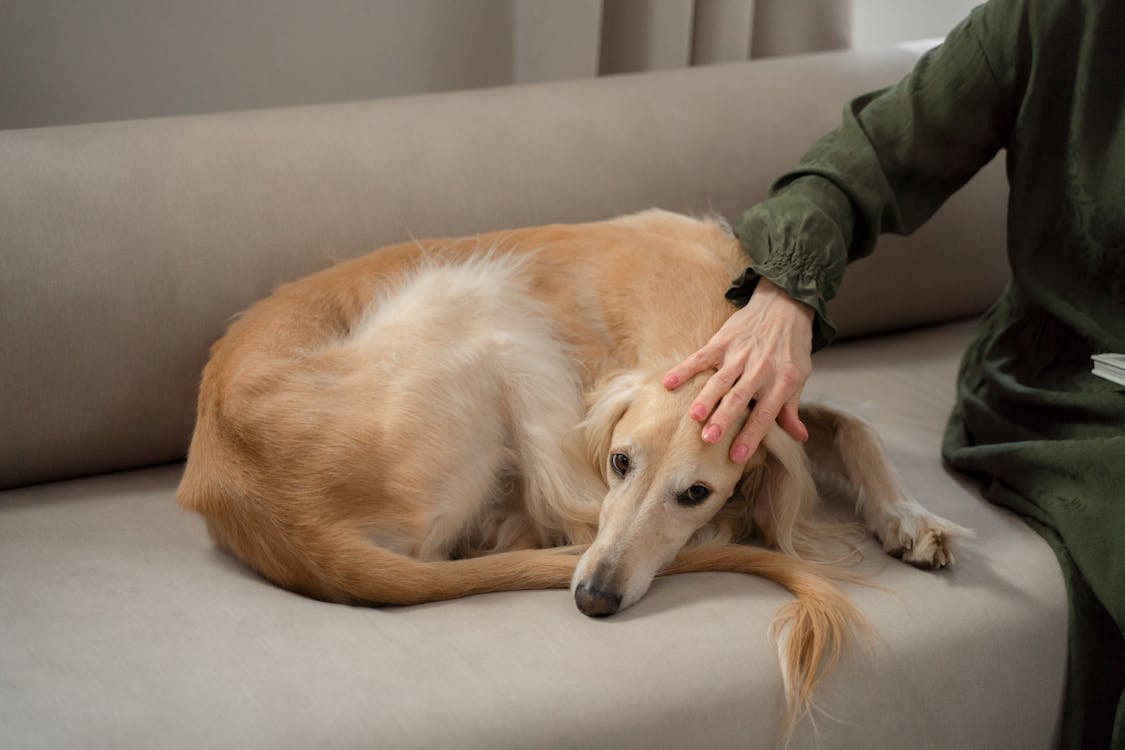
The Sizing Guide Nobody Warned You About
If there is one thing that determines whether a recovery suit actually works, it is sizing. Not the brand, not the fabric, not the price point. Sizing. A correctly sized suit from a mid-range brand will outperform a premium suit in the wrong size every time, because a suit that slips provides no real protection at all.
The most common mistake is using weight as the primary measurement. Weight correlates loosely with size, but dogs of the same weight can have dramatically different body proportions. A 20 kg Whippet and a 20 kg French Bulldog share almost nothing in terms of body shape. Sizing by weight alone produces a suit that fits one of them and fails the other.
The two measurements you actually need
-
Chest girth (your primary measurement) Wrap a soft tape measure around the widest point of the chest, just behind the front legs. Keep it snug but not compressive: two fingers should slide underneath comfortably. This single measurement determines whether the suit can close securely and maintain contact across the body. It is the most important number you will take.
-
Back length (your secondary measurement) Measure from the base of the neck (where a collar sits) to the base of the tail. This confirms the suit will cover the incision site from front to back with no exposed section at either end.
With both measurements, use the brand's sizing chart and match to whichever measurement falls in the larger size. If your dog sits between sizes, size up. A suit that is slightly long in the back is easily managed. A suit that cannot close across the chest is useless.
| Size | Approx. Weight | Chest Girth | Common Breeds |
|---|---|---|---|
| XS | 2 to 4 kg | 28 to 38 cm | Chihuahua, toy breeds |
| S | 4 to 8 kg | 38 to 48 cm | Shih Tzu, Pug, Miniature Dachshund |
| M | 8 to 15 kg | 48 to 60 cm | Cocker Spaniel, French Bulldog |
| L | 15 to 25 kg | 60 to 72 cm | Labrador, Border Collie |
| XL | 25 to 40 kg | 72 to 86 cm | German Shepherd, Golden Retriever |
| XXL | 40 kg+ | 86 cm+ | Great Dane, Mastiff, Saint Bernard |
Breed-specific sizing considerations
Several body types require extra attention:
- Deep-chested breeds (Greyhound, Doberman, Weimaraner, Great Dane): chest girth typically reads as a larger size than back length or weight would suggest. Always prioritise chest girth for these breeds.
- Barrel-chested breeds (English Bulldog, Rottweiler, Boxer): require significant stretch across the chest with a relatively shorter back. Confirm the fastening closes comfortably without strain.
- Sighthounds (Whippet, Saluki, Afghan Hound): narrow torsos and fine bone structure can make standard suit proportions loose in unexpected places. Check thigh circumference as well as chest girth.
- Heavily coated breeds (Bernese Mountain Dog, Newfoundland, Saint Bernard): at higher risk of overheating in warm weather. Choose the most breathable fabric available and limit wearing time during hot spells.
Manufacturers of purpose-built recovery suits typically offer sizing support and exchange policies for first-time buyers. If you are uncertain between two sizes for an unusual body type, contact the brand before purchasing rather than after. A brief exchange of measurements takes minutes. Waiting for a replacement suit to arrive after ordering the wrong size can cost days of unprotected recovery time.
Source: Pupcovery Sizing Guide
Putting It On Without a Struggle
A correctly sized suit that your dog refuses to wear is still not providing wound protection. Most dogs are cautious about new clothing at the best of times. After surgery, when they are sore, disorientated, and operating at reduced patience, the introduction needs to be calm and well-planned.
The preparation step most owners skip
Before you bring your dog over, open all fastenings completely and lay the suit flat. Have high-value treats within easy reach. The few seconds of preparation beforehand means your dog is not standing and waiting while you fumble with unfamiliar zips, which is exactly how a calm moment becomes a stressful one.
Step-by-step dressing guide
-
Start with your dog standing if possible A standing position gives the best access to all four legs without requiring the dog to roll. If your dog is too sore or weak to stand, side-lying works for most suit styles. Reward the position before you begin.
-
Thread the front legs first, slowly Guide each front leg through its opening without rushing, particularly if the shoulder area is close to the surgical site. Pause between legs to reward and reassure.
-
Draw the body panel over the back Pull the main panel over the back and close the primary fastening. The fabric should sit flush against the body with no bunching directly over the wound site.
-
Thread the back legs through Guide each back leg through the rear openings. For male dogs, confirm the design allows normal urination without requiring full suit removal.
-
Check fit at the key points Slide two fingers along the edges at the chest, belly, and wound area. Fabric should maintain consistent contact without creating pressure. The wound should be fully covered with no exposed edges.
The first hour: what is normal and what is not
Some head-shaking, spinning, and mild investigation is normal. Dogs explore new sensations. Rewarding calm behaviour generously in the first 20 minutes builds a positive association that pays dividends across two weeks of wear.
Frantic or sustained attempts to remove the suit, with distress signs such as panting, vocalising, or refusing to move, may indicate the suit is pressing on the wound site or the fit is wrong. Check for seams or fastenings positioned directly over the incision before assuming the behaviour is purely protest.
How Long Should a Dog Wear a Recovery Suit?
Duration is determined by your vet, not the calendar. Most soft tissue surgeries require 10 to 14 days of wound protection, based on PDSA guidance, with the exact endpoint depending on the type of wound closure used and how healing progresses at the follow-up appointment.
Night wear: should the suit stay on?
Yes, for most dogs. This is one of the key practical advantages of a recovery suit over a cone: dogs can sleep comfortably in their usual positions without obstruction. Overnight hours are also among the highest risk for wound interference, because supervision drops to zero. The suit continuing to protect the wound while your dog sleeps is a feature, not a limitation.
The main consideration for overnight wear is that the suit must stay clean and dry. If your dog has a loose motion overnight or the suit becomes soiled for any reason, change it as soon as you discover it and inspect the wound. Bacteria from soiling near a healing wound is a genuine risk.
Monitoring the Wound: What You Are Looking For
VCA Animal Hospitals recommend checking the incision at least twice daily throughout recovery. With a suit in place, this means opening or removing the garment, examining the wound under good light, and replacing the suit before the dog can investigate. The whole process should take under two minutes once you are practiced at it.
How to check properly
Good light is not optional. A wound that looks fine in a dim hallway can look quite different under a proper lamp. Gently part the fur around the incision if coat has grown over the edges, and look at the actual suture line rather than the surrounding area.
Signs of normal healing
- Mild bruising or skin discolouration in the first 48 to 72 hours
- Slight swelling at the wound edges in the first few days
- A small amount of dried blood or clear serum along the suture line on day one
- The incision feeling slightly warm in the first 48 hours
- Gradual reduction in swelling and redness across the first week
- Wound edges that appear to draw progressively closer together
Warning signs that need a vet call
- Continuous or heavy bleeding at any stage of recovery
- Swelling that is increasing rather than decreasing after 48 hours
- Redness spreading outward from the wound edges beyond day 3
- Yellow, green, or cloudy discharge from the incision
- A foul or unusual odour from the wound area
- Missing, loose, or visibly damaged sutures or staples
- The wound appearing to open, gap, or separate along any part of the suture line
- Your dog refusing food beyond 48 hours post-surgery
- Repeated vomiting or unusual lethargy beyond day 2
- Visible dampness or soiling inside the recovery suit around the wound area
VCA Animal Hospitals advise strongly against cleaning incisions with hydrogen peroxide or rubbing alcohol. Both chemicals damage the new cells forming at the wound surface and impair rather than assist healing. If the wound appears contaminated, contact your vet rather than attempting home cleaning. Similarly, keep the incision dry throughout recovery: no bathing, no wet grass, no swimming, until your vet confirms complete healing at the suture removal appointment.
Source: VCA Animal Hospitals, Care of Surgical Incisions in Dogs
Recommended Product: Pupcovery Dog Recovery Suit
- Post-spay and post-neuter abdominal recovery
- Dogs who struggle with traditional e-collars
- Hot spot and skin condition management
- Shedding control during high-shed seasons
The Pupcovery Recovery Suit was designed specifically for post-surgical use, not repurposed from general pet clothing. Soft, stretchy activewear fabric maintains consistent body contact without pressure on the incision. The zip-on design allows full removal in under a minute for twice-daily wound checks. Double-stitched seams and reinforced leg openings handle two weeks of continuous, active wear and repeated washing without failing.
- Breathable fabric designed for all-day and overnight wear
- Easy-zip design for quick daily wound access without full removal
- Breed-specific sizing support available from the manufacturer
- Machine washable at 30 degrees
"Far better than the cone in every respect. My dog slept normally, ate without problems, and completely stopped fixating on the incision. The fabric is genuinely soft, the sizing guide was accurate, and it has held up through multiple washes without losing shape. Would not hesitate to recommend."
- Dogs adapt quickly and tolerate it far better than a cone
- Stays securely in place through normal movement, sleep, and walks
- Accurate sizing with a helpful, detailed measurement guide
- Quality construction that holds up through the full recovery period
What to Do If the Suit Is Not Working
A recovery suit that is not doing its job is not always obvious. The signs are sometimes subtle.
Signs the suit has slipped or failed
- The wound area is visible at the edge of the garment rather than fully covered
- The fabric has bunched over or away from the incision site
- You find hair or debris between the suit and the skin at the wound area
- Your dog has been able to lick the wound, even once
If the suit is slipping consistently, first check whether it is the correct size. A suit that slides sideways is usually too large in the chest. One that rides forward and exposes the incision is too short in the back. Many manufacturers provide exchanges for first-time buyers for exactly this reason. Contact the brand before assuming the problem cannot be solved.
When the dog defeats the suit repeatedly
Some dogs are genuinely more persistent than others. If your dog is consistently finding ways to reach the wound despite a correctly fitted suit, switch to a hard e-collar for overnight periods or when you cannot supervise, and use the suit during waking hours when you can intervene quickly if needed.
The combination approach, suit during supervised daytime hours and cone overnight, is not a compromise. For genuinely determined dogs, it is the most effective strategy available.
Caring for a Recovery Suit During the Recovery Period
A suit that is being worn every day for two weeks needs washing. Most purpose-built recovery suits are machine washable at 30 degrees. Wash on a gentle cycle and air dry rather than using a tumble dryer, which can degrade the stretch fabric over repeated cycles.
Ideally, have two suits available for the recovery period. This allows one to be washed and drying while the other is worn, which matters particularly if the suit becomes soiled and needs immediate replacement.
Inspect the suit each time you remove it for wound checks. Look for areas where fabric has worn thin, stitching that has begun to separate, or fastenings that no longer close securely. A suit that has deteriorated structurally may no longer provide reliable protection even if it appears to still fit.
Beyond Surgery: Other Uses for a Recovery Suit
A well-fitting recovery suit does not need to live in a drawer between surgeries. The same properties that make it useful after an operation make it genuinely helpful for several ongoing situations.
Hot spots
Acute moist dermatitis, the common name for hot spots, spreads rapidly because licking and scratching worsen the underlying inflammation while introducing new bacteria. A recovery suit worn over a treated hot spot on the torso or flanks breaks this cycle continuously, including during overnight hours when owners cannot intervene. The fabric must be lightweight and breathable to avoid trapping moisture, which would worsen the condition rather than help it. Hot spots on the face, ears, or paws require different management, but torso and flank lesions respond well to this approach.
Environmental allergies
Dogs with grass pollen or mould sensitivities often develop belly and flank irritation from direct skin contact with ground-level allergens during walks. A lightweight suit worn during outdoor excursions reduces this contact and the subsequent scratching and licking cycle it triggers. For dogs with known seasonal allergies, a recovery suit worn during high-pollen periods can significantly reduce the severity of flare-ups between veterinary treatments.
Shedding management
Double-coated breeds including Huskies, German Shepherds, Labradors, and Golden Retrievers shed quantities of fur during seasonal coat changes that can feel genuinely implausible given the dog's size. A lightweight suit worn during peak shedding periods contains loose fur before it reaches furniture, carpets, and every item of clothing you own. It is not a permanent solution, but it significantly reduces the fur distribution during the heaviest weeks.
Dog owners who purchase recovery suits solely for post-surgical use frequently find additional applications once they experience the garment in practice. Hot spot management, allergy reduction, and bandage protection are among the most common secondary uses reported. Treating the suit as a one-use purchase underestimates its practical value between surgical events.
Source: Pupcovery Customer FeedbackCan You Use a Baby Onesie on a Dog Instead? The Honest Answer
For small dogs in an emergency, yes. A baby onesie provides a temporary physical barrier over an abdominal wound when nothing else is available. It is inexpensive, found in most supermarkets, and the snap closure covers the right area.
The limitations are real, though, and they compound over a full recovery period.
| Factor | Baby Onesie | Purpose-Built Recovery Suit |
|---|---|---|
| Sizing accuracy | Designed for human infant proportions; leg openings and chest dimensions rarely match dogs | Designed around dog anatomy with specific measurement guides |
| Wound coverage | May not cover the full incision line, particularly for male dogs or longer wounds | Designed to cover standard post-surgical sites consistently |
| Toilet access | Snap closure sits over the urethral area in male dogs; requires full removal | Most include a belly panel or access flap for urination |
| Fabric stretch | Standard cotton does not always stretch adequately across a dog's torso during movement | Activewear fabric maintains consistent body contact during activity |
| Durability | Not designed for dog movement patterns; seams may fail under pressure or with washing | Double-stitched construction built for recovery-period use |
| Best use | Emergency measure for the first night when nothing else is available | Primary protection across the full 10 to 14 day recovery period |
If you use a baby onesie as an emergency measure: size by chest girth rather than weight (a 3 to 6 month size suits dogs under 6 kg; a 12 to 18 month size for dogs up to 12 kg), cut a tail hole in the back, and treat it explicitly as a temporary solution while you order a proper recovery suit.
Order the Suit Before Surgery Day
PDSA recommends having all protective equipment ready before your dog comes home from surgery. Arriving with a groggy, disoriented dog and then trying to source and fit a recovery garment is unnecessary stress added to an already difficult day for both of you.
Measure your dog before the surgery date. Order the Pupcovery Dog Recovery Suit in advance, wash it once, and have it ready. The zip-on design means it can be fitted in under a minute, even if your dog is still groggy and less than enthusiastic about the process.
- Consistent wound coverage without restricting vision or normal movement
- Breathable activewear fabric for all-day and overnight wear
- Quick-release zip for twice-daily wound inspection
- Machine washable construction for hygiene across the full recovery period
- Post-spay and post-neuter recovery
- Abdominal and soft tissue surgeries
- Hot spot management and ongoing skin conditions
- Dogs who need a practical, comfortable cone alternative
Frequently Asked Questions
Sources and References
- Care of Surgical Incisions in Dogs, VCA Animal Hospitals
- Bandage and Splint Care in Dogs, VCA Animal Hospitals
- How to Care for Your Dog After Surgery, PDSA
- Beyond Closure: Wound Care, AAHA Trends Magazine
- The Cone of Shame Makes Pets Miserable, University of Sydney
- Ovariohysterectomy, American College of Veterinary Surgeons
- Pupcovery Dog Recovery Suit, Pupcovery.com
- FAQ and Sizing Guide, Pupcovery.com
Further Reading
- Dog Spay Recovery: The Complete Owner's Guide, Pupcovery Blog
- Dog Recovery Tips and Guides, Pupcovery Blog
- Spaying in Dogs: What to Expect, VCA Animal Hospitals
- Surgical Incision Care in Dogs, VCA Animal Hospitals
- Post-Surgery Dog Care at Home, PDSA
- Wound Care After Surgery: AAHA Clinical Guidance
- The Research Behind Cone Welfare, University of Sydney