
When Can My Dog Walk After ACL Surgery? A Vet-Backed Week-by-Week Answer
The question almost every owner asks before the anaesthetic has fully worn off is the same: when can my dog walk after ACL surgery? Fair question, too, because your dog looks at you the very first evening as though the leg is fine and the walk is overdue. Here's the honest answer: your dog can begin short, slow, supervised leashed walks to the toilet within the first day or two, but real walking, the kind your dog is picturing, is built up gradually over weeks under your surgeon's guidance.
What matters is not the distance. Control is everything. This guide walks you through the recovery week by week, from the first careful steps to eventual off-leash freedom, with clear warning signs, a comparison of surgery types, and honest advice on protecting the incision along the way.
Your dog spent the whole car ride home giving you the look. You know the one. "I didn't consent to this and I remember everything."
Quick Answer
When can a dog walk after ACL surgery? Very short leashed potty walks usually start within the first day or two, but controlled therapeutic walks are increased slowly over roughly eight to twelve weeks, and off-leash running only returns once your surgeon confirms bone or ligament healing. Always follow your surgeon's specific rehabilitation plan, and stop if the leg swells, and the dog is in pain.
Key Takeaways
- Short, slow, leashed toilet walks typically begin within the first 24 to 48 hours; distance and duration increase gradually over the following weeks.
- Walking after ACL surgery means controlled, on-leash, deliberate movement, not free play, stairs, or letting the dog set the pace.
- Off-leash activity is the last privilege to return, usually only after your surgeon confirms healing at a recheck, commonly around the two to four month mark depending on the procedure.
- The most common recovery setback is doing too much too soon, followed closely by the dog reaching the incision.
- Always follow the written rehabilitation protocol from your surgeon; timelines here are general veterinary guidance, not a substitute for your dog's plan.
In This Article
- When can my dog walk after ACL surgery?
- Why controlled walking matters so much
- Week-by-week walking timeline
- Does the surgery type change the timeline?
- How to actually walk a dog recovering from ACL surgery
- Dog exercise after knee surgery: what counts and what does not
- When your dog will not leave the incision alone
- Dog activity after ACL repair beyond walking
- When can a dog go off leash after surgery?
- Warning signs that mean stop and call the vet
- Protecting the incision through the whole recovery
- Frequently Asked Questions

When can my dog walk after ACL surgery?
Your dog can begin very short, slow, leashed walks to the toilet within the first day or two after ACL surgery, but everything beyond that is built up gradually over weeks. Those first outings are measured in metres, not minutes, and their only purpose is to let the dog relieve itself and gently load the leg.
Early weight-bearing is actually a good sign, and most dogs will toe-touch or lightly place the operated leg within days. The American College of Veterinary Surgeons notes that gentle, controlled use of the limb is part of a normal recovery from cranial cruciate ligament disease, the condition most people call a canine ACL tear.
What you are not doing yet is walking. In the first fortnight, the dog leaves the house on a lead, does its business, and comes straight back in. If that sounds unglamorous, it is. Recovery plans always sound simple, then the dog gets involved.
You are probably already noticing the gap between how the dog feels and how healed the dog actually is. That gap is the whole challenge of the next two months, and closing it safely is what this guide is about.
Expert Insight: The American Kennel Club emphasises that strict activity restriction in the early weeks is the single biggest factor owners control, and that overactivity is a leading cause of complications after canine knee surgery.
Source: American Kennel Club (AKC)
Why controlled walking matters so much
Controlled walking matters because ACL surgery does not restore a healthy ligament overnight; it creates a mechanical repair that needs time for bone, soft tissue, or implants to stabilise. Loading that repair too hard, too early, is how a smooth recovery turns into a setback.
In procedures such as the TPLO, the surgeon actually cuts and repositions bone, then holds it with a plate, so the recovery is genuinely about bone healing. VCA Animal Hospitals describes cruciate repair as a process where gradual, guided return to function protects the surgical result.
Here is the part owners underestimate. A dog that feels good is far more dangerous to itself than a dog in pain. Modern pain control is excellent, which is wonderful for comfort and slightly terrifying for anyone trying to enforce rest. The dog feels fine and wants the garden. The leg is not fine yet.
This is where most owners get caught out. The surgery goes well, the dog perks up by day four, and a single enthusiastic leap off the sofa undoes a fortnight of careful rest. Controlled walking is not fussiness. It is the difference between one operation and two.
Week-by-week walking timeline after ACL surgery
Walking after ACL surgery follows a predictable arc: near-total rest first, then slowly lengthening leashed walks, then gentle inclines and turns, and finally, much later, controlled off-leash freedom. The timeline below is general veterinary guidance and your surgeon's written plan always overrides it.
Cornell University's College of Veterinary Medicine and other veterinary teaching hospitals stress that structured, progressive rehabilitation produces better long-term outcomes than either strict cage rest alone or unrestricted activity. Progression, not rushing, is the goal.
| Recovery phase | Typical walking allowed | Verdict |
|---|---|---|
| Days 1 to 14 | Very short leashed potty walks only, a few metres, straight in and out | Rest phase: protect the incision and let inflammation settle |
| Weeks 2 to 4 | Short, slow, flat leashed walks of a few minutes, once or twice daily | Introduce gentle movement, watch weight-bearing improve |
| Weeks 4 to 8 | Gradually longer leashed walks, gentle inclines, slow controlled turns | Build strength; still fully leashed and deliberate |
| Weeks 8 to 12 | Longer structured walks, light rehab exercises as directed | Rebuilding endurance; recheck with surgeon before advancing |
| After surgeon clearance | Gradual return to off-leash and normal activity | Only once healing is confirmed at a recheck |
Notice that the numbers are ranges, not promises. A nine-year-old mastiff and a two-year-old spaniel do not heal on the same calendar, and your surgeon may move faster or slower based on the recheck. For a fuller day-by-day version, our day-by-day ACL surgery recovery timeline breaks each stage down further.
If your dog had a TPLO specifically, the bone-healing element changes the emphasis slightly, and our week-by-week TPLO recovery guide covers that procedure in detail.
Expert Insight: AAHA-accredited practices routinely build recovery around scheduled rechecks, because the decision to advance activity should be based on how the individual dog is healing, not on the calendar alone.
Source: American Animal Hospital Association (AAHA)

Does the surgery type change the walking timeline?
Yes, the type of ACL repair affects how quickly your dog can build up walking, because different procedures rely on different healing processes. The three most common approaches are TPLO, TTA, and the extracapsular or lateral suture technique, and each has its own emphasis.
TPLO and TTA both involve cutting and stabilising bone, so their recovery is partly governed by bone healing, which follows a fairly reliable biological schedule. The extracapsular technique uses a strong suture outside the joint to mimic the ligament, and relies on scar tissue building around it for long-term stability.
The AKC's overview of ACL surgery for dogs explains that bone-based procedures are often favoured for larger, more active dogs, while suture-based repairs may suit smaller or lower-demand patients. Your surgeon chooses based on the dog, not fashion.
Whatever the method, the walking principle is identical: rest first, then controlled progression, then freedom last. The surgery decides some of the pace. It never changes the direction. For a broader look, our canine ACL surgery recovery guide compares what to expect across the different techniques.
Expert Insight: MedVet and other referral surgical groups note that TPLO is one of the most widely performed cruciate procedures in dogs precisely because it produces a predictable, well-studied rehabilitation pathway when activity is properly controlled.
Source: MedVet

How to actually walk a dog recovering from ACL surgery
Walking a dog after ACL surgery is a skill in patience: keep the lead short, the pace slow, the ground flat, and the dog beside you rather than ahead of you. The single biggest mistake is letting the dog decide the speed, because a recovering dog has no interest in convalescence.
Use a well-fitted harness or a short lead rather than a long retractable line, so the dog cannot suddenly lunge or spin. Sudden pivots and twists put exactly the rotational stress on the knee that surgery was meant to remove. Straight lines are your friend.
Walk on grass, carpet, or non-slip flooring wherever possible. Polished floors and wet decking turn a stable leg into a slipping one, and a slip on a fresh repair is genuinely dangerous. Slings or support towels under the belly can help larger dogs on those first wobbly outings.
Break walks into small, frequent outings rather than one long one. Three brief, calm walks are far kinder to a healing knee than a single ambitious loop that leaves the dog sore that evening. If the limp is worse after a walk than before it, you did too much.
Dogs, for their part, treat the recovery lead as a personal insult. They have places to be and squirrels to supervise. Your job for a few weeks is to be gently, immovably boring, and to remember that the tedium is temporary while a re-injury is not.
The surgical team spent hours on that knee. Your dog will undo a week of it in three seconds flat on day eleven. This is the universal experience of every ACL recovery owner.
Dog exercise after knee surgery: what counts and what does not
Dog exercise after knee surgery in the early weeks means controlled leashed walking and, later, specific rehabilitation exercises prescribed by your vet or a canine rehab therapist, not running, fetch, or free play. The word exercise misleads owners, because it conjures energy, and energy is the enemy of a fresh repair.
Prescribed rehabilitation might include gentle range-of-motion movements, slow figure-of-eight walking later on, controlled sit-to-stand repetitions, or hydrotherapy once the incision has fully healed. These are targeted, low-impact, and introduced in stages. Cornell's veterinary specialists highlight that guided physical rehabilitation can improve strength and function when timed correctly.
What does not count as helpful exercise: chasing a ball, wrestling with the other dog, zoomies around the garden, or leaping onto furniture. All of these involve exactly the explosive, twisting loads a cruciate repair cannot yet tolerate.
| Activity | Early recovery | Verdict |
|---|---|---|
| Short leashed flat walks | Yes, as directed | The foundation of safe recovery |
| Prescribed rehab exercises | Only when instructed | Valuable, but stage-dependent |
| Stairs and jumping | No until cleared | High-risk twisting loads |
| Fetch, running, play | No | Leading cause of re-injury |
| Off-leash garden time | No until cleared | Uncontrollable, save for late recovery |
Expert Insight: Zoetis, a global animal-health company, notes that consistent pain management alongside restricted activity supports steadier healing, because a comfortable dog rests better and a rested joint heals better.
Source: Zoetis

When your dog will not leave the incision alone
The problem: within a few days of surgery, many dogs discover the incision and decide it is the most interesting object in the house. Licking and chewing at stitches introduces bacteria, irritates the skin, and can pull sutures loose, which is exactly how a clean surgical wound becomes an infected one that delays every walking milestone above.
What makes licking so frustrating is that the behaviour often creates the very problem the dog is trying to soothe. A little licking becomes redness, redness becomes irritation, irritation invites more licking, and suddenly the recovery clock stops. VCA Animal Hospitals warns that preventing licking of the surgical site is essential to avoid infection and wound breakdown.
The traditional answer is the plastic cone, and it works, but many dogs are miserable in it, crash into doorframes, and cannot settle to rest, which is counterproductive when rest is the whole plan. Our guide on keeping a dog from licking stitches without a cone covers the alternatives in depth.
The solution: A purpose-designed recovery suit that covers the incision without the stress of a traditional cone, so the dog can rest, walk to the toilet, and settle normally while the wound stays protected.
Expert Insight: The American College of Veterinary Surgeons advises that keeping the surgical site clean, dry, and undisturbed is a core part of post-operative care, and that any interference with the incision should be prevented promptly.
Source: American College of Veterinary Surgeons (ACVS)
Dog activity after ACL repair beyond walking
Dog activity after ACL repair covers far more than walks; it includes how the dog moves around the house, gets on and off furniture, uses stairs, and rides in the car, and all of these need managing just as carefully as the walks themselves. The garden and the living room cause as many setbacks as the pavement.
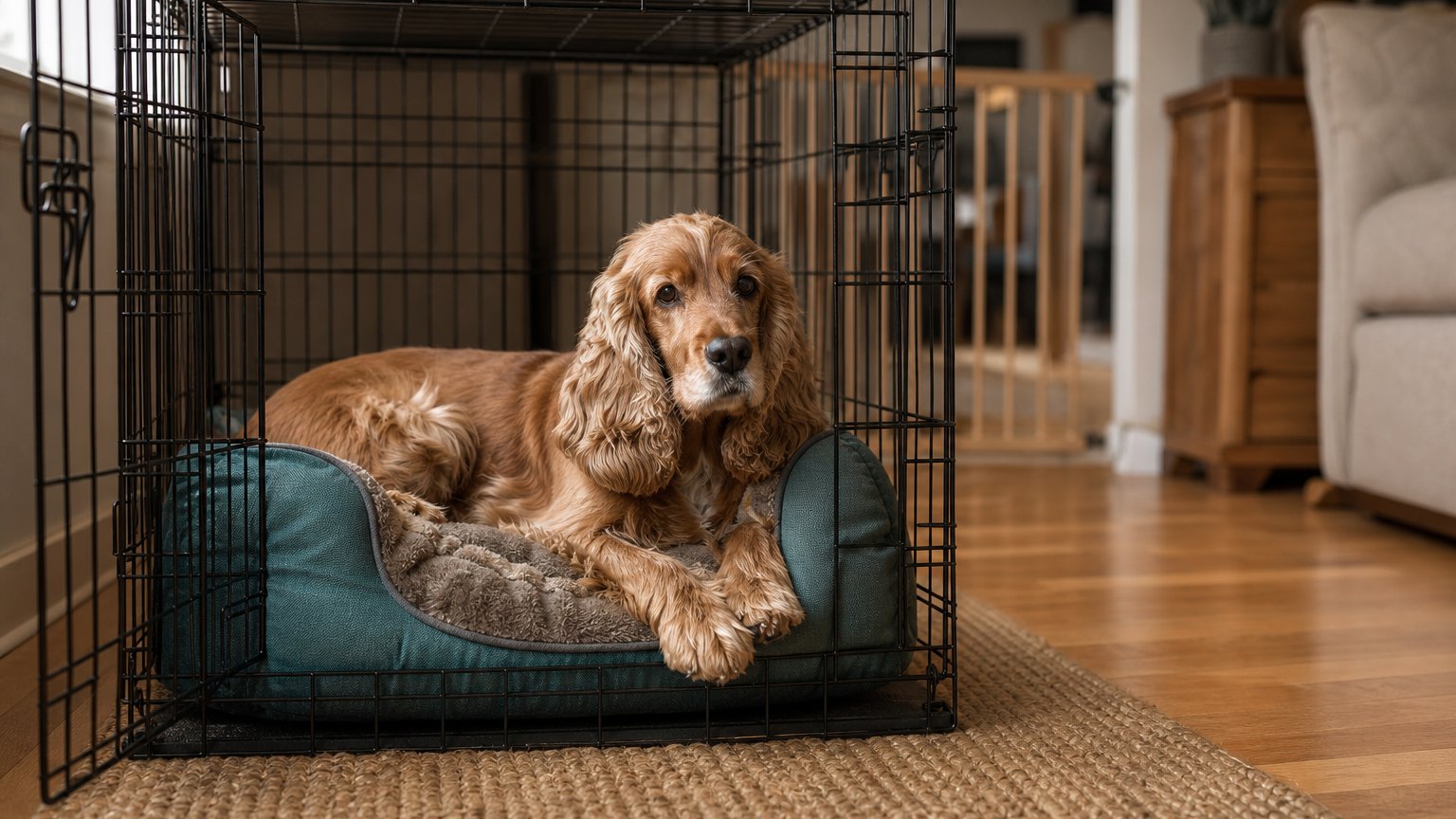
Confine the dog to a small, safe area or a suitably sized crate when unsupervised, because an unwatched recovering dog will find the one activity you forgot to forbid. Block stairs with a gate, lift smaller dogs, and use a ramp or a boost for the car so the leg is never asked to jump.
Slippery floors deserve their own mention. A dog scrambling for grip on laminate can twist the operated knee in a fraction of a second, so rugs and runners along the dog's usual routes are a cheap, effective safeguard. Our overview of what to expect after TPLO surgery expands on managing the home environment.
Mental activity is the underrated hero here. A dog that cannot burn energy physically becomes restless, and a restless dog invents its own exercise. Slow-feeder bowls, gentle scent games, stuffed food toys, and calm training keep the brain busy while the leg stays still. Tire the mind, spare the knee.
Home Setup Checklist for a Recovering Dog
- Non-slip rugs or runners along the dog's regular indoor routes.
- A baby gate blocking all stairs until your surgeon clears them.
- A crate or small pen for unsupervised rest periods.
- A ramp or lift for the car and any raised surface.
- Furniture access blocked so the dog cannot jump on or off.
- Enrichment toys ready to keep the mind occupied during rest.
When can a dog go off leash after surgery?
A dog can usually go off leash after ACL surgery only once the surgeon confirms healing at a recheck, which commonly falls somewhere around the two to four month mark depending on the procedure and the individual dog. Off-leash freedom is the last privilege to return, and for good reason.
The whole risk of off-leash movement is that it is uncontrollable. You cannot promise a dog will not spot a cat, wheel around, and sprint, and a single explosive turn on a not-quite-healed knee can undo everything. That is why the lead stays on long after the dog feels ready.
Return to off-leash activity is gradual even after clearance: a few minutes in a secure, enclosed space, on flat ground, building up over time rather than a triumphant release into a muddy field. AAHA-accredited practices generally recommend confirming healing with a physical recheck, and where relevant follow-up imaging, before advancing to unrestricted activity.
Owners often expect a single moment of graduation. In reality it is a dimmer switch, not a light switch. The lead comes off in stages, in safe places, with your surgeon's blessing, and the dog is genuinely readier for it than it was the week it demanded the ball back.
Expert Insight: VCA Animal Hospitals advises that dogs should not return to running, jumping, or off-leash play until a veterinarian confirms the repair has healed sufficiently, because premature high-impact activity is a common cause of complications.
Source: VCA Animal Hospitals

Week four is when dogs feel basically fine and owners start quietly Googling "can I just let them run a bit." The answer is no. It will be no for a while yet.
Warning signs that mean stop and call the vet
Stop all walking and contact your vet if the incision opens, swells markedly, oozes, or smells, if the dog suddenly stops bearing weight, or if there is a clear increase in pain or lethargy. These signs suggest the recovery has strayed from normal and needs professional eyes, not more rest at home.
Some swelling and bruising in the first days is expected, and mild fluctuation in how much the dog uses the leg is normal. What matters is the trend: a leg that is slowly improving is reassuring, while a leg that suddenly worsens after weeks of progress is a red flag.
A wound that develops a foul odour deserves urgent attention, because smell is one of the clearest signals of infection. Our guide on what a smelly dog wound actually means explains when that becomes an emergency, and our guide to normal stitches healing stages shows what healthy healing should look like instead.
When to Call Your Vet
- The incision opens, gapes, or a suture comes loose.
- Increasing swelling, redness, heat, or discharge at the surgical site.
- Any foul smell coming from the wound.
- Sudden refusal to bear any weight on the operated leg.
- Pain that seems worse rather than better, or new whimpering and restlessness.
- Loss of appetite, lethargy, or fever beyond the first day or two.
- The dog reaches and disrupts the incision despite protection.
Expert Insight: The American College of Veterinary Surgeons advises owners to contact their surgical team promptly if they notice significant swelling, discharge, or a sudden change in limb use, rather than waiting for the next scheduled appointment.
Source: American College of Veterinary Surgeons (ACVS)
You will check every item on that list at 11pm. Then again at midnight. Possibly with a torch six inches from the wound. This is called being a good owner. It is also called not sleeping.
Protecting the incision through the whole recovery
The problem: incision protection is not a first-week job, it is a whole-recovery job, because dogs return to the surgical site again and again, especially as the skin heals and starts to itch. Just when you relax, around the time the sutures are due out, is often when the dog renews its interest.
Itching during healing is normal and maddening for the dog, and a dog that cannot resist a good scratch or lick at an itchy incision can reopen a wound that was almost closed. Managing that temptation across the full recovery, not just the first few days, is what keeps the walking timeline on track.
The solution: A purpose-designed recovery suit that covers the wound without the stress of a traditional cone, worn during the vulnerable healing weeks so the incision stays protected while your dog goes about its restricted daily routine.
If you are weighing a suit against a cone, our roundup of the best dog cone alternatives for 2026 lays out the honest pros and cons of each option so you can choose what genuinely suits your dog.
Keep the Recovery On Track, Not Back to Square One
Protecting the incision is the quiet part of ACL recovery that decides whether the walking timeline holds. A comfortable, cone-free dog rests better and heals steadier.
Shop the Recovery Suit →Frequently Asked Questions: Walking After ACL Surgery
How soon after ACL surgery can my dog walk to the toilet?
Most dogs can take very short, slow, leashed walks to the toilet within the first 24 to 48 hours after ACL surgery. Keep it to a few metres on a short lead, straight out and straight back, purely so the dog can relieve itself without loading the leg hard.
How long until my dog can walk normally after ACL surgery?
Controlled walks are built up over roughly eight to twelve weeks, with near-normal walking often returning within a few months, though this varies by procedure and individual dog. Your surgeon confirms progress at rechecks, so treat any timeline as guidance rather than a guarantee.
When can a dog go off leash after ACL surgery?
Off-leash activity usually returns only after a surgeon confirms healing at a recheck, commonly around two to four months depending on the procedure. Even then, return gradually in a secure, flat, enclosed space rather than releasing the dog straight into open running.
How far should I walk my dog after ACL surgery?
Start with just a few metres for toileting, then increase distance and duration slowly under your surgeon's plan, often by a few minutes at a time over successive weeks. If the limp is worse after a walk than before it, you went too far and should scale back.
Can my dog use stairs after ACL surgery?
Stairs should be blocked or avoided until your surgeon specifically clears them, because climbing and descending place twisting loads on the healing knee. Use a baby gate, lift smaller dogs, and reintroduce stairs slowly and only when advised.
Is it normal for my dog to limp weeks after ACL surgery?
Some limping and fluctuating leg use is normal for weeks as strength rebuilds, and gradual improvement is the reassuring sign. A sudden worsening after steady progress, or a refusal to bear any weight, is not normal and warrants a call to your vet.
What exercise can my dog do after knee surgery?
Early exercise means controlled leashed flat walks and, later, specific rehabilitation exercises prescribed by your vet or a canine rehab therapist. Running, fetch, jumping, and free play are off the table until the repair has healed and your surgeon clears higher-impact activity.
Can I let my dog in the garden after ACL surgery?
Only on a lead and under supervision in the early weeks, because an unrestricted garden invites sudden sprints and twists. A dog left loose outdoors can undo weeks of healing in a single chase, so keep garden trips leashed until cleared.
What happens if my dog does too much too soon after ACL surgery?
Doing too much too soon can cause swelling, pain, implant or repair failure, and in some cases a need for revision surgery. Overactivity is one of the most common causes of complications, which is exactly why controlled walking matters so much.
Should my dog wear a cone or a recovery suit after ACL surgery?
Both prevent licking, but many dogs rest and settle far better in a recovery suit than a plastic cone. Because rest is central to recovery, a comfortable, cone-free option can help, provided it fully covers the incision and is kept clean and dry.
How do I stop my dog licking the ACL incision?
Cover the incision with a recovery suit or cone, supervise closely, and manage itching by keeping the area clean and dry as your vet directs. Licking introduces bacteria and can pull sutures loose, so preventing access to the site is a priority throughout healing.
When can my dog swim or do hydrotherapy after ACL surgery?
Swimming and hydrotherapy are only introduced once the incision has fully healed and your surgeon or rehab therapist approves, often several weeks in. Water work can be excellent low-impact rehabilitation, but entering it too early risks contaminating an unhealed wound.

Sources and References
- American College of Veterinary Surgeons. Cranial Cruciate Ligament Disease. acvs.org.
- American Kennel Club. ACL Surgery for Dogs. akc.org.
- VCA Animal Hospitals. Cranial Cruciate Ligament Disease in Dogs. vcahospitals.com.
- VCA Animal Hospitals. Surgical Wound Care in Dogs. vcahospitals.com.
- Cornell University College of Veterinary Medicine, Riney Canine Health Center. vet.cornell.edu.
- American Animal Hospital Association. Post-operative care guidance. aaha.org.
- MedVet. Cruciate ligament surgery information. medvet.com.
- Zoetis. Canine pain management resources. zoetis.com.


